
WorkSafe Progresses Code of Practice
02 Mar 2026, Health & Safety, Industry News, News, Regulatory
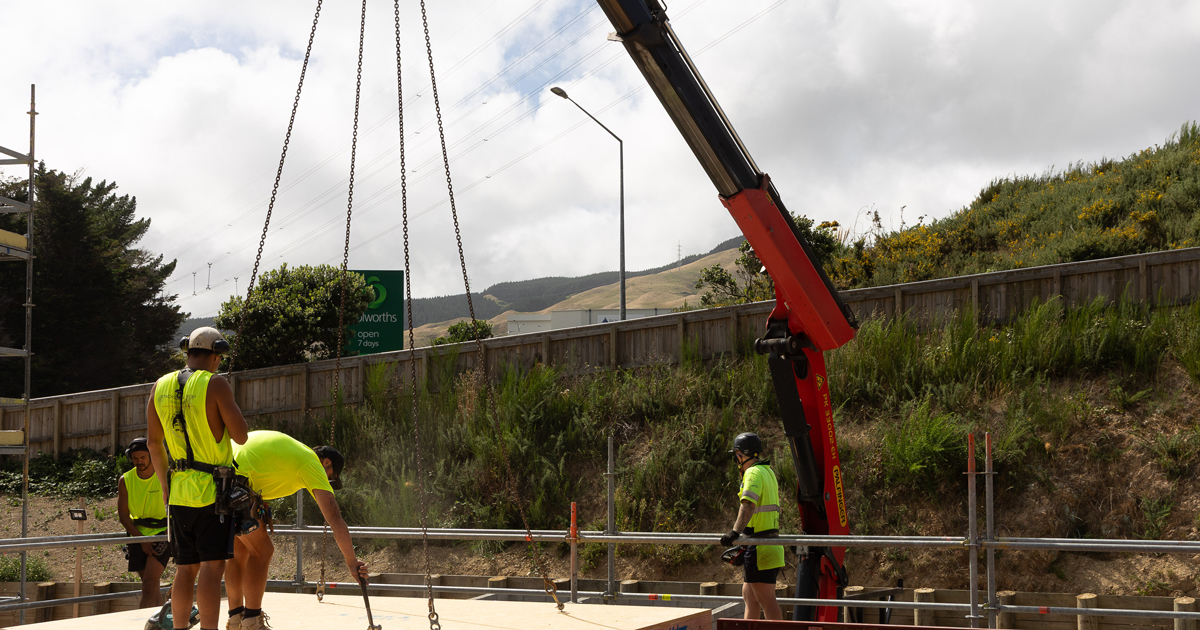
WorkSafe is drafting a new Approved Code of Practice for roles and responsibilities in residential construction. It is aimed at providing clearer health and safety guidance for builders and trades, with public consultation planned for 2026
WorkSafe is developing an Approved Code of Practice (ACOP) focused on roles and responsibilities in residential construction, as part of a broader programme addressing health and safety risks in high-harm sectors.
WorkSafe said the work responds to ongoing concerns from the sector about unclear and fragmented health and safety guidance.
WorkSafe said the residential construction sector continues to experience some of the highest rates of serious harm and that businesses across the sectors reported they need clearer, more practical guidance they can rely on.
Ministerial direction and reform context
The residential construction code of practice is being developed following a request from the Minister for Workplace Relations and Safety Brooke van Velden.
“In mid-2025, the Minister van Velden asked WorkSafe to develop [the] ACOP as part of broader health and safety reforms,” WorkSafe said.
The work aligns with WorkSafe’s established priority plans and its longer-term strategic direction.
What an Approved Code of Practice (ACOP) does
An ACOP sets out standards that show how duty holders can meet their obligations under the Health and Safety at Work Act (HSWA) 2015 and its regulations.
WorkSafe said an ACOP differs from other guidance because “an ACOP can be used as evidence of whether or not a duty or obligation under HSWA has been complied with”, it must be approved by the Minister, and its development must include consultation with affected people.
While not mandatory, WorkSafe said an APOC “sets a standard for compliance”. Duty holders can choose alternative approaches, provided these are “equivalent or better than the standard set out in the ACOP”.
WorkSafe is developing an ACOP for residential construction because it has the highest volume of activity in the wider construction industry and the highest rate of injuries. Furthermore, most operators lack in-house health and safety specialists, sometimes assume another party is responsible for managing risks and report uncertainty about overlapping duties.
Gaps in existing construction guidance
Engagement carried out during 2024 and 2025 highlighted widespread uncertainty across the residential construction sector about health and safety responsibilities.
WorkSafe said feedback showed that “many builders, contractors and workers are unsure about their health and safety responsibilities”. Participants reported that existing guidance is fragmented and not specific enough to environments and does not give the level of clarity people need to confidently meet their HSWA duties.
The new residential construction ACOP is intended to address these concerns by providing clearer, more targeted guidance for day-to-day work on site.
Focus on practical application
WorkSafe said the new ACOP will reflect the approach outlined in its 2025–2029 Statement of Intent, which places greater emphasis on education and engagement with businesses.
“These ACOPs will provide clear, plain language standards tailored to the ‘practical realities’ of work on farms and residential construction sites,” WorkSafe said.
The guidance aims to help people:
- Understand what good health and safety practices look like.
- Reduce preventable harm.
- Support safer, more confident decision making.
Industry involvement in development
The residential construction ACOP is being developed alongside industry participants through multiple engagement forums.
Reference groups for construction include representatives from Master Builders, Master Plumbers, CHASNZ and Site Safe, alongside WorkSafe subject matter experts and people working directly in the sector. WorkSafe said this group “provides an extra layer of robustness in the ACOP development by testing assumptions, providing sense checks during the guidance development process, and checking we’re staying aligned on scope”.
Sector-specific working groups are also providing “timely feedback and real-world content validation”, while the Industry Advisory Guidance Group offers broader system-level input.
Current status and next steps
WorkSafe said the residential construction ACOP is currently in the drafting phase.
“Our Content Development team is working closely with stakeholder groups to ensure the ACOPs are ‘sensible and workable’, reflecting the actual day-to-day realities of modern New Zealand workplaces,” WorkSafe said.
Work is also underway on layout and design to ensure the guidance is “clear and easy to understand”.
WorkSafe is working towards providing the completed draft ACOP to the Minister for approval by 30 June 2026. Public consultation on the draft is currently planned for 20 April to 10 May 2026, with details still being finalised.
Further information on the scope of the residential construction code of practice is available on the WorkSafe website, with updates to be provided as development continues.
Feedback and questions can be directed to the ACOP Delivery Team at ACOPDelivery@worksafe.govt.nz.
Register to earn LBP Points Sign in