
Public Works Act passes first reading
16 Jan 2026, Building & Housing, Govt Announcements, Industry News, Regulatory

Legislation to modernise the Public Works Act has cleared its first parliamentary hurdle. The reforms aim to shorten historically slow processes, increase fairness in compensation, and improve safeguards – particularly for Māori landowners
The Public Works Amendment Bill passed its first reading in Parliament in December 2025. Land Information Minister Chris Penk said the current Act had not been updated in nearly 50 years and was hindering delivery of essential infrastructure such as roads, schools, hospitals, water and energy networks.
“A targeted review in 2024 confirmed it lacks clarity and commonsense in several areas, which has resulted in complex regulations and inefficient processes for land acquisition,” he said.
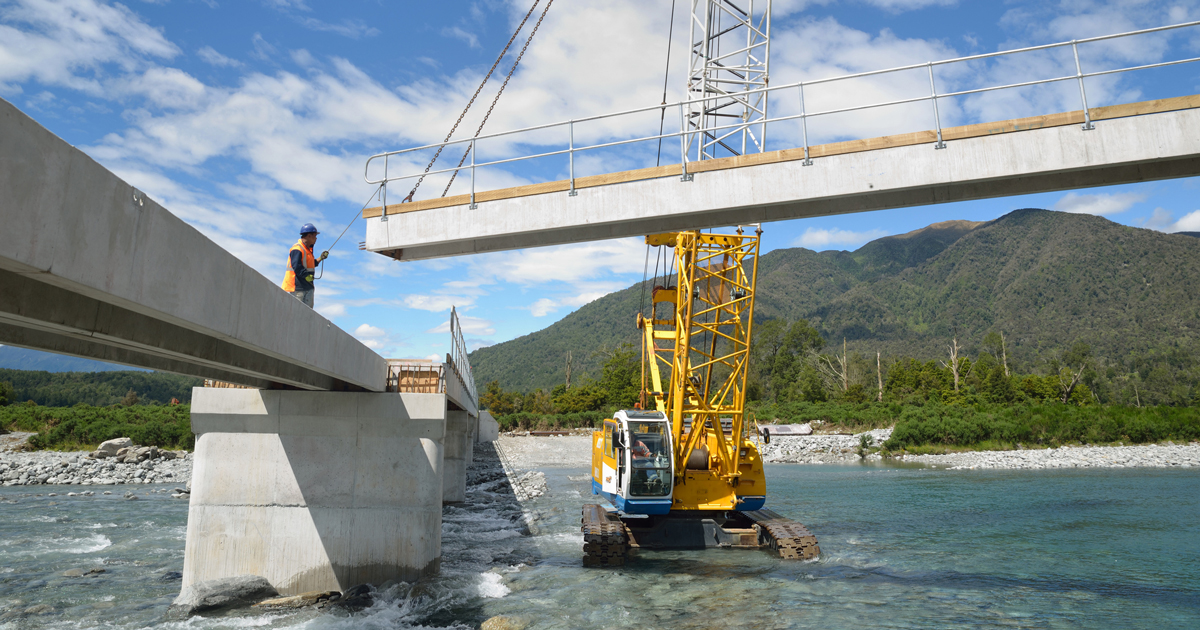
The Public Works Act allows the Government and local authorities to acquire private land for public works such as roads, bridges, schools, hospitals, and other infrastructure projects.
The Bill now goes to the Transport and Infrastructure Select Committee for further public consultation.
Why reform matters to infrastructure delivery
A review of the Public Works Act found that land acquisition for public works frequently took up to a year in straightforward cases, and two or more years when compulsory acquisition and court objections were involved. The review cited duplication, outdated negotiation processes and disjointed agency practices as key causes of delay.
Penk said reform was essential to tackle productivity constraints and boost infrastructure investment, aligning with broader government goals to support economic growth and housing development.
“It can take years to secure the land needed for development. This is slowing down the delivery of the new schools, hospitals, roads, water, and power facilities that improve New Zealanders’ lives and support a productive economy,” he said.
“The Public Works Amendment Bill will accelerate infrastructure delivery while protecting landowners’ rights, raise compensation, improve disputes processes and make it easier for landowners and agencies to navigate the system.”
Changes to compensation and acquisition processes
Key proposed reforms include:
- Incentive payments: Landowners who agree to sell before a Notice of Intention (a formal notification from a Minister or local authority to a landowner, stating their interest in acquiring specific land for a public project) is issued will receive a payment equal to 10% of land value, up to $100,000, to encourage early voluntary agreement.
- Higher disruption payments: Base home‑loss payments (additional compensation for homeowners whose main residence is taken for public projects) will rise from $35,000 to $50,000, and land‑loss payments from $250‑$25,000 to $350‑$35,000. Home‑loss payments will also extend to multiple homes on a property.
- Simplified processes: Government and local authorities can now collaborate more directly on connected projects, and Transpower will be able to acquire land by agreement, bypassing slower standard procedures.
- Emergency provisions: New powers will allow land acquisition after a declared state of emergency to support rapid restoration of critical infrastructure.
Addressing historic inequities for Māori landowners
Earlier phases of the overhaul have begun tackling compensation inequities for Māori landowners. The Government has confirmed that Māori freehold land will be valued at parity with other land types, correcting a longstanding undervaluation under the existing Act.
Compensation will also be extended to all separately owned dwellings on Māori land rather than being paid in a single lump sum. When compulsory acquisition is unavoidable, the process will require joint approval from both the Minister for Land Information and the minister responsible for Māori land portfolios.
Next steps
The Bill has gone to the Transport and Infrastructure Select Committee for consideration.
Register to earn LBP Points Sign in