

A refurbishment masterpiece
19 Jun 2026, Industry News, News, Prove Your Know How
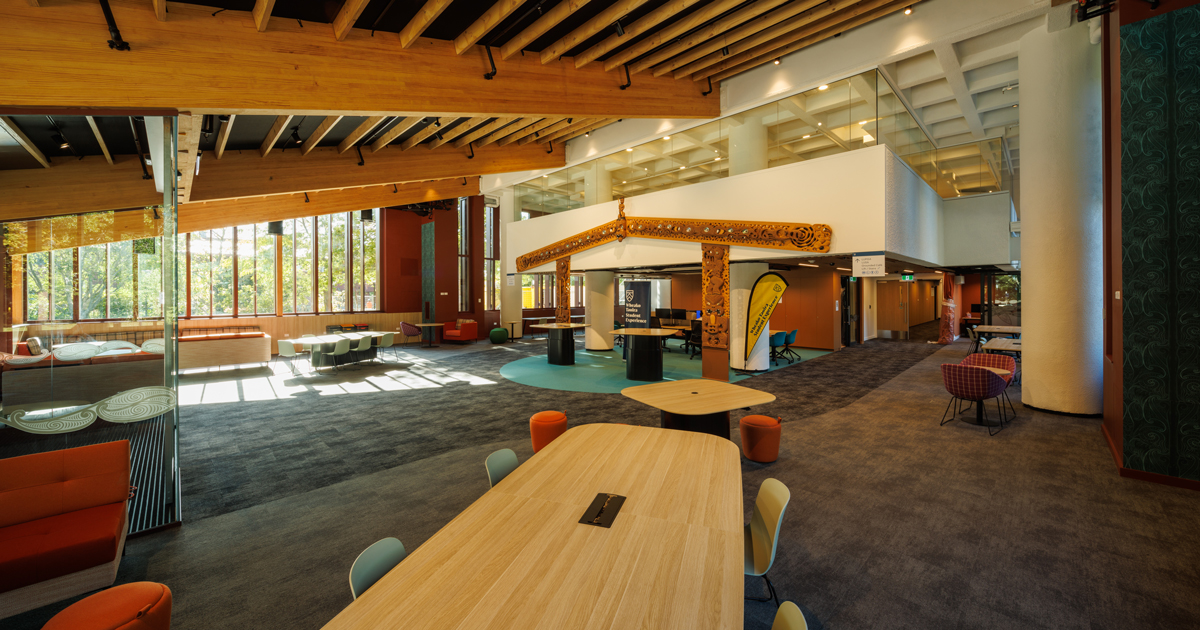
Any refurbishment of this scale would be a challenge in itself, but the complex and delicate nature of completing it beneath six occupied floors of a live university building helped The George Forbes Building (Stage 3) secure the Supreme Under $10 million Award at the 2026 New Zealand Commercial Project Awards
Delivered by Leighs Construction, The George Forbes Building (Stage 3) project at Lincoln University received the Commercial Project $3m to $10m Value Award. Judges praised the planning and coordination required to deliver the project beneath occupied floors, describing it as a refurbishment completed with “care, precision, and respect for the existing building”.
For Senior Project Manager Alex Fearon, the complexity of the project stemmed from the need to undertake major structural work while the building continued to function as part of the university campus.
“Delivering a major structural upgrade beneath six live floors of a working university demanded exceptional planning, care, and communication,” he said.
The project team had to maintain access to occupied upper floors throughout construction, while a live communications room, plant room and lift systems located within the construction zone remained operational.
Fearon said early contractor involvement played a key role in managing those challenges before work began, while the approach helped the project reach completion ahead of schedule, while also earning recognition from Lincoln University for its safety performance.
Working around a live campus
Maintaining normal university operations was a key consideration throughout the build.
According to Fearon, regular communication with the university’s project delivery team allowed construction activities to be planned around the institution’s day-to-day requirements.
“Flexibility in programming was also critical. By adapting our sequencing and working methods, we were able to carry out often noisy construction activities while carefully managing their timing to avoid disruption to interviews, exams, and teaching within the live areas of the building.”
The judges highlighted the level of planning required to transform the university’s main entrance without disrupting campus life. The project removed outdated areas, created new spaces and reshaped the arrival experience for students and visitors.
Unexpected challenges below ground
While the occupied building created one set of challenges, the existing structure presented another.
Fearon said identifying and isolating live services during demolition proved particularly demanding.
“Many of these were difficult to fully scope in advance, which led to some very early starts on-site for testing electrical circuits before the building opened for teaching, to ensure everything could be safely isolated.”
Some potable water services were embedded within concrete and could only be isolated through building-wide shutdowns, requiring careful coordination to avoid unnecessary disruption.
The team also encountered underground service trenches containing live infrastructure that added complexity.
“These not only contained live services that needed to be protected throughout construction, but also required additional structural input from BECA and further construction works to accommodate the new building layout and functionality.”
Blending old and new
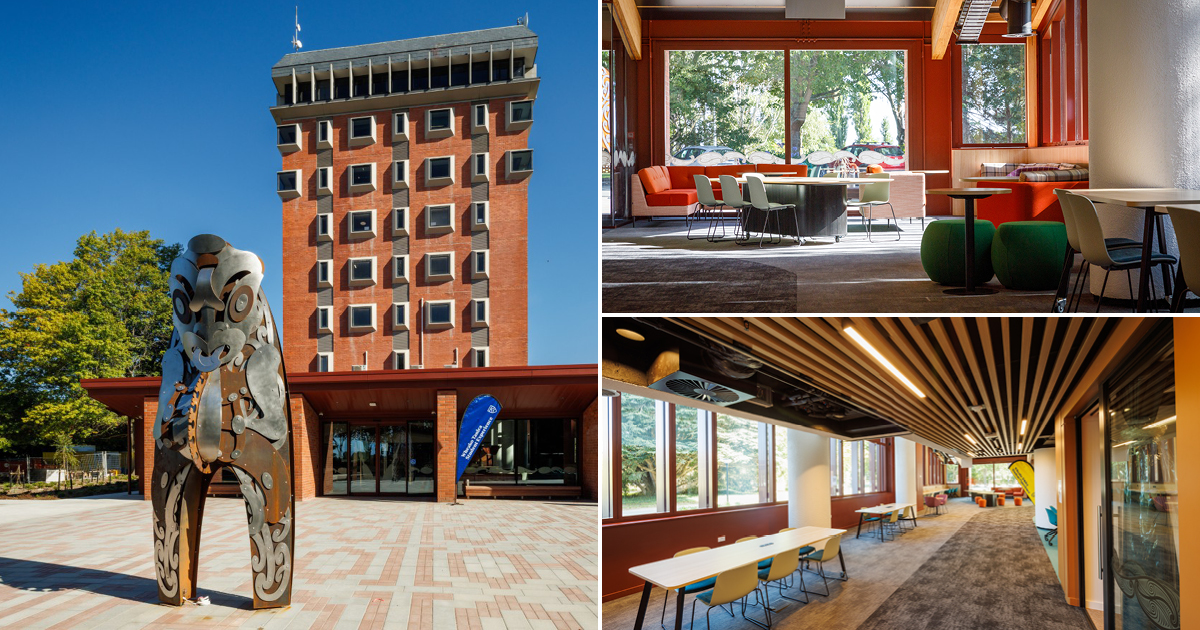
A key feature of the completed project was the retention of original brick columns, which were incorporated into the new design.
The judges noted that retaining and integrating the columns helped strengthen the connection between the building’s past and present.
Fearon said achieving that outcome required significant attention to detail.
“One of the primary difficulties was demolishing the existing brickwork to align precisely with the geometry of the new roof structure.”
Matching existing brickwork also proved challenging. To create a seamless finish, the project team combined new bricks with materials salvaged from another demolition project elsewhere on the Lincoln University campus.
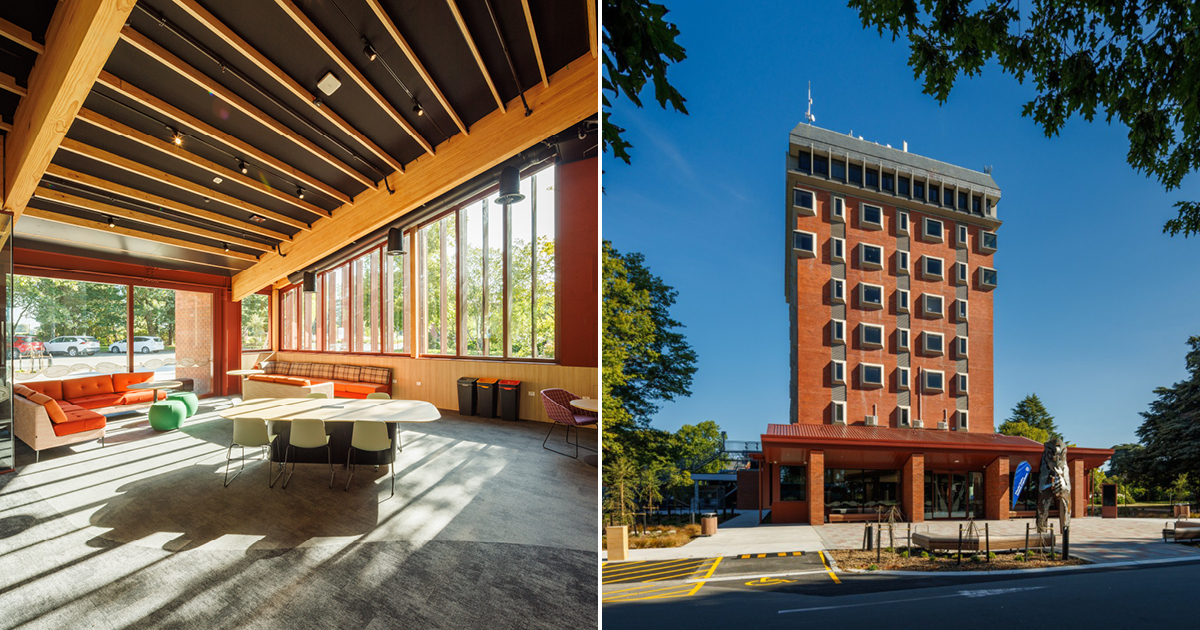
The refurbishment was also shaped by structural requirements associated with a new roof structure featuring four exposed glulam beams, each around 10m long and 850mm deep.
“The sequencing of works was largely built around their successful installation.”
Fearon said the remediation of the existing stippled plaster was another standout.
“It required sourcing a specialist tradesperson with the precise skills needed to replicate and restore the finish,” he added. “This did necessitate some reworking of the programme to accommodate their availability, but the outcome was absolutely worth it and has preserved an important aspect of the building’s character.”
Finally, Fearon explained how the coordination with the Lincoln University commissioned artists and skilled craftspeople involved was also incredibly rewarding.
“This included the creation of the new Pou and the reconfiguration and restoration of the existing Waharoa for installation within the building,” he added. “Ensuring these culturally significant elements were integrated at the right points in the construction sequence – and delivered without issue – was a highlight as well as a standout feature.”
Recognition for the project team
Fearon believes the project’s success ultimately came down to collaboration between the construction team and the university.
“What made this project stand out to the judges was the high level of engagement required with the client team to successfully deliver the project, while minimising disruption to Lincoln University’s core role of educating future leaders.”
The project was completed ahead of schedule and transformed the university’s main entrance while maintaining campus operations throughout construction.
For Fearon, receiving the Supreme Under $10m Award is recognition of the collective effort behind the project.
“From the outset, everyone involved shared a clear and consistent focus: to deliver the required outcome at the right time, with minimal disruption throughout.”
“To have that effort recognised on such a significant stage is incredibly meaningful. It’s a testament to the coordination, collaboration, and shared determination across the entire team.”
Register to earn LBP Points Sign in