
Consultation opens on earthquake-prone building guidance
06 Nov 2026, Building & Housing, Building and housing, Govt Consultations, Industry News, Prove Your Know How
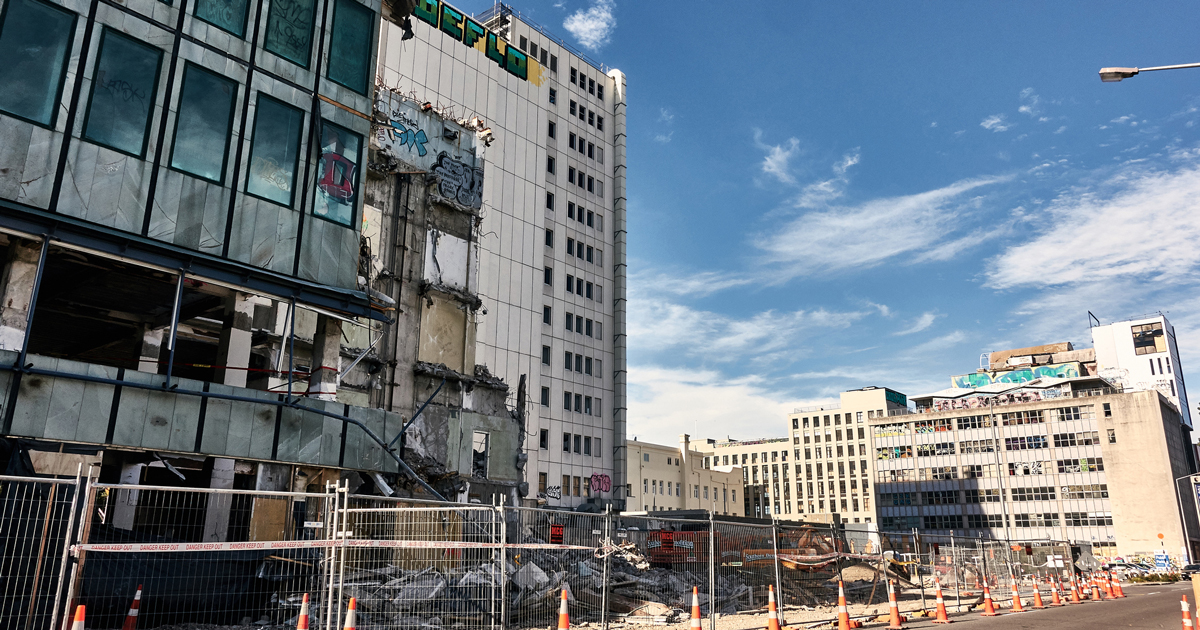
Draft guidance explaining how New Zealand’s new earthquake-prone building system will operate is open for feedback until 4 December 2026, ahead of the system taking effect on 1 July 2027
The Ministry of Business, Innovation and Employment (MBIE) is seeking feedback on practical instructions for councils, engineers and building owners implementing the new earthquake-prone building (EPB) system.
The guidance covers how the system will apply and how existing earthquake-prone buildings will transition into or out of it.
MBIE General Manager Building System Performance David Hall said the guidance would support implementation of the Building (Earthquake-prone Buildings) Amendment Act 2026.
“It explains which buildings will remain EPBs and what work is required for their EPB status to be removed.
“We want to hear from the people who will use the guidance to make sure it is clear and can be readily applied in practice,” he said.
From legislation to practice
The draft guidance replaces the practical function of the 2017 EPB methodology. Feedback will help MBIE develop secondary legislation for formal consultation in early 2027.
Consultation opened on 27 October. MBIE will also hold webinars for territorial authorities, engineers and building owners.
Further implementation support will include separate policy guidance to help councils administer the system, a ‘Standardised Securing Handbook’ and education.
The Handbook is in development and will provide standardised solutions and procedures for securing unreinforced masonry (URM) and other designated earthquake-prone buildings. This is expected to reduce the number of buildings requiring specific engineering design.
More targeted strengthening requirements
The consultation follows legislation narrowing the system’s scope. Around half of currently designated earthquake-prone buildings are expected to leave the regime.
Under the new system, only unreinforced masonry buildings and buildings of at least three storeys constructed from heavy materials can be designated as earthquake prone. The system will apply only in medium and high seismic zones.
Strengthening requirements will depend on building type and location.
Owners of one or two-storey unreinforced masonry buildings in small towns or rural areas will only be required to display an earthquake-prone building sign and remain on the register. Seismic work will still be needed to remove the designation.
For one or two-storey unreinforced masonry buildings in urban centres, and buildings of three storeys or more in small towns, requirements will focus on managing falling façade risks.
Targeted retrofits will apply to unreinforced masonry buildings of three or more storeys in urban centres, and tall, heavy buildings with structural deficiencies in urban centres or small towns.
Engineering New Zealand previously supported this approach in principle, while warning that sufficient engineering capacity would be needed for assessments and strengthening work.
Register to earn LBP Points Sign in