

Economists express construction recovery caution
17 Dec 2025, Industry News, News
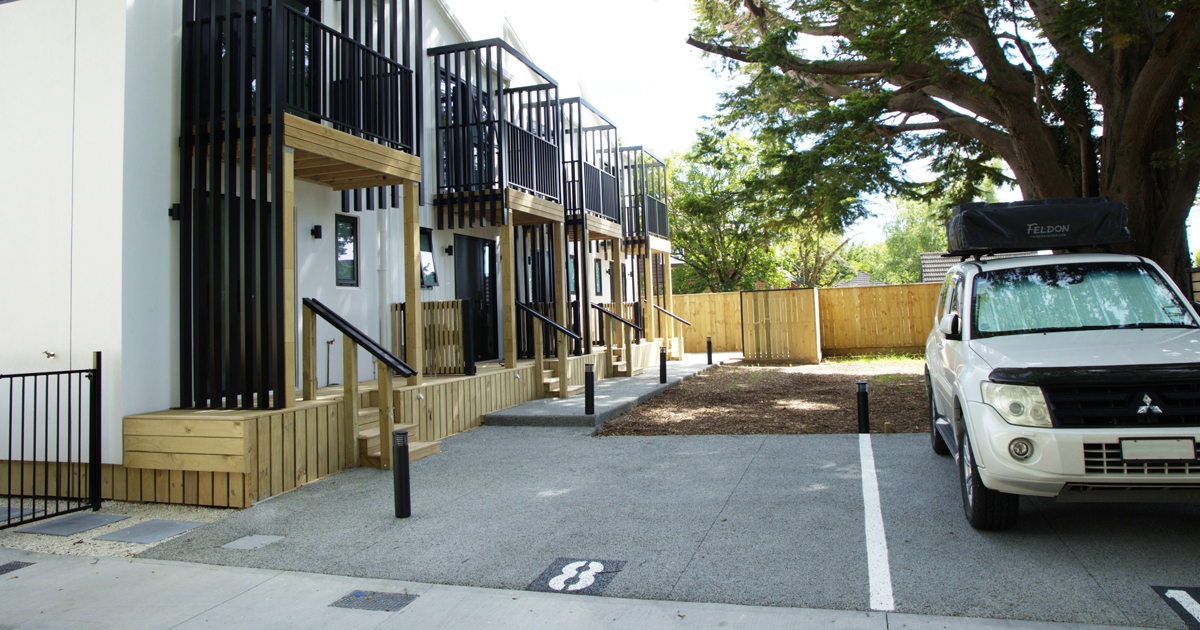
Two major banks have expressed the need for caution when assessing the construction sector’s modest rebound in the September 2025 quarter – but say there are grounds for optimism
Separate reports published by Westpac and ASB Bank indicate that while the construction sector is recovering, uptick is slow and will depend on external factors such as population growth.
The recovery is due to a 2.8% increase in residential building activity over the quarter, signalling a tentative recovery after a sharp decline in previous years. Westpac economists said the residential building cycle “looks like it has now found a floor”, though activity remains about 25% below the 2022 peak.
ASB noted that recent improvements in building consents suggest developers are bringing more projects to market. Nationwide, new home consents rose 6.2% in the year ended October 2025 compared with the previous year, totalling 35,552 new dwellings. Multi-unit homes drove the increase, with consents for townhouses, flats and units up 9.9%, and apartment consents surging 54.1%. Stand-alone house consents saw a smaller 1.9% rise.
In October 2025 alone, 3,520 new dwellings were consented – a 23.5% increase year-on-year. Among these, consents for townhouses, flats and units rose 37.3%, while stand-alone houses grew by 15%.
Positive and negative factors
Both banks pointed to lower interest rates as a supportive factor, but emphasised that weak population growth and a surplus of existing housing stock are likely to limit the pace of recovery.
“The outlook for the construction sector is conditional on demand for the sector and the supply capacity within the sector (we are closely watching costs), with two sided risks to our expectation of a modest construction sector recovery over 2026,” said the ASB report.
Westpac Senior Economist Satish Ranchhod added that home building is likely to remain around current levels in the near term.
“However, with the pipeline of new projects now lifting, we expect to see residential construction turning higher over 2026. That recovery is expected to be gradual,” he said.
Capital expenditure on the backburner
In contrast, non-residential building work declined 1.3% in the same quarter, marking the fifth consecutive quarterly contraction.
“Weak economic activity has seen businesses winding back their capital expenditure and has also discouraged the development of new commercial space,” added Ranchhod.
“In our recent talks with businesses, a number of those we spoke to indicated that they’re holding off on major capital expenditure for the time being due to uncertainty about the economic landscape. Consistent with that, we expect some further softness in the near term.”
ASB said that a recent increase in costs per square metre in newly consented non-residential construction suggests that costs may dampen further momentum in non-residential construction.
Positive signs on the horizon
However, there are signs that the construction sector will experience a lift during 2026. ASB economists are cautiously optimistic that good results will continue into the new year.
“We are constructive on the outlook given supportive OCR settings, despite a patchy housing market backdrop,” they said.
Westpac, which had earlier forecast a modest decline, noted the result as an upside surprise.
“Home building is likely to remain around current levels in the near term. However, with the pipeline of new projects now lifting, we expect to see residential construction turning higher over 2026,” said Ranchhod.
Register to earn LBP Points Sign in
1 Comment
Leave a Reply
You must be logged in to post a comment.
Interesting insights. My takeaway is that the construction sector in New Zealand is starting to stabilise after the significant slowdown of the past few years. The increase in multi-unit housing consents and lower interest rates are positive signals for the residential sector.
At the same time, factors such as population growth, housing supply levels and construction costs will likely determine how strong and how fast the recovery will be. It seems the outlook for 2026 is cautiously optimistic, but the recovery may take time.