

H1 compliance settings updated
08 Dec 2025, Building & Housing, Govt Announcements, Industry News, Regulatory
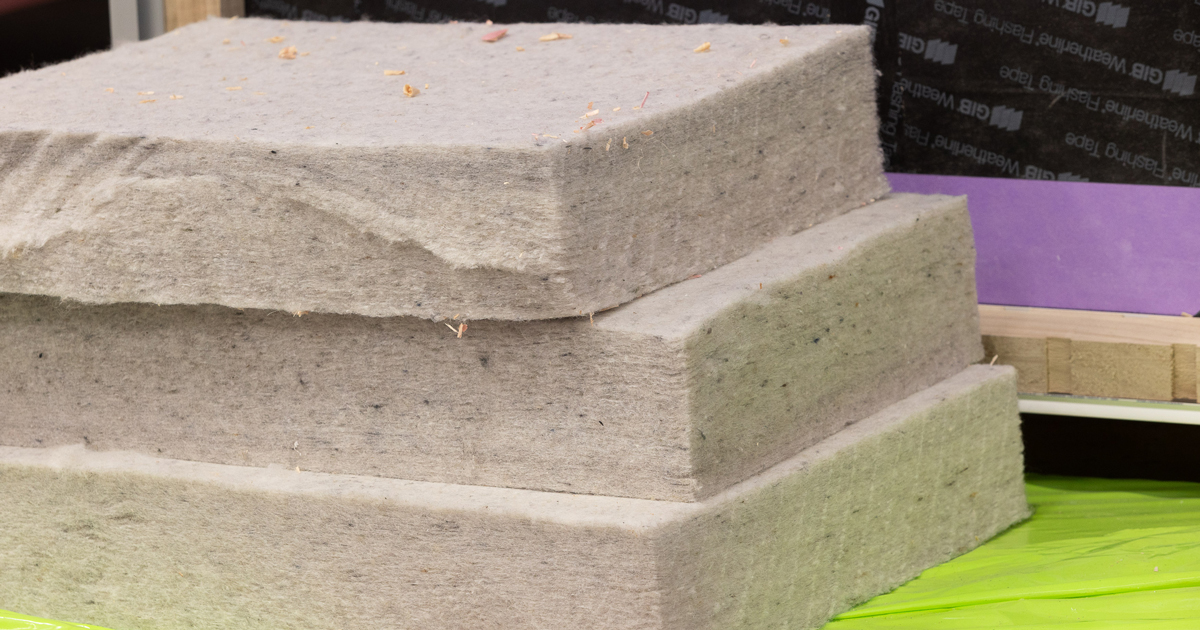

The Ministry of Business, Innovation and Employment (MBIE) has updated the settings for compliance with the energy efficiency requirements of Clause H1 of the Building Code
MBIE has made targeted changes to the acceptable solutions and verification methods for H1 Energy Efficiency to improve clarity, flexibility and affordability for designers, builders and homeowners.
These changes follow a public consultation from December 2024 to February 2025 and build on the already announced decision to remove the Schedule Method as a ‘deemed to comply’ pathway, announced in July 2025. A review of the H1 settings in 2024 had identified opportunities to better balance upfront building costs and longer-term benefits.
The overall level of energy efficiency and insulation required remains unchanged and will continue to help created warm, dry and energy efficient buildings across New Zealand.
When Building and Construction Minister Chris Penk announced the changes in July 2025, New Zealand Certified Builders chief executive Malcolm Fleming was quick to show his support.
Fleming said the removal of the “blunt instrument” that was the schedule method was good news and demonstrated the minister was listening to the industry.
“These are sensible and pragmatic changes to the H1 regulations. They’ve been in action for two years now, and it is not uncommon to make appropriate adjustments to such systems as time goes by.”
The changes to H1 energy efficiency include:
- More flexibility in insulation requirements with the Schedule Method being removed as a compliance pathway for insulation.
- Clearer measurement rules, with the roof, wall and floor areas being measured using overall internal dimensions to ensure more consistency.
- Improved modelling methods in H1/VM1 and H1/VM2 to better align with modern building practices.
- New requirements to ensure thermal bridging from wall framing is more accurately represented.
- Enhanced tools and tables for windows and slab-on-ground floors to cover more common building scenarios.
The updated AS/VMs take effect immediately, and a 12-month transition period will run until 26 November 2026. Designers have a 12-month transition period to fully adopt the changes by that date.
MBIE will work closely alongside the sector to ensure there is widespread understanding of the changes and how they should be implemented during the transition period.
Delving into the detail
Some of the more commonly discussed changes that are going ahead are outlined below.
- For H1/AS1, the minimum construction R-value for slab-on-ground floors has been removed under the calculation method.
- In H1/AS2, under the calculation method, the minimum R-values for roofs and floors have been removed.
- Minimum construction R-values for roofs, walls, and floors (other than slab-on-ground) are now specified directly – instead of as a percentage of “reference building” R-values used in previous reference-building equations.
- For multi-unit dwellings and mixed-use buildings, it is now possible to treat the building as having either a single thermal envelope or multiple thermal envelopes when using the calculation method.
- The method for determining thermal resistance of framed walls has been revised to better address typical levels of thermal bridging (ie, heat loss through framing) – a wall framing fraction of no less than 38% shall be assumed unless it can be demonstrated that a lower wall framing fraction is appropriate for the building. As a consequence, the wall R-value in the reference building heat loss equations has also been reduced.
- Minimum construction R-values no longer apply where heated ceilings, heated walls or heated floors are installed solely in rooms that contain a shower, bath or toilet.
Register to earn LBP Points Sign in