

Rethinking H1 compliance without the raised heel
13 Jul 2026, PlaceMakers News, Product news, Prove Your Know How
For architects and builders, roof design has long been a balancing act between thermal performance, buildability, compliance and cost. With the 6th Edition of H1 becoming mandatory from 27 November 2026, that balance is shifting once again, but Comfortech suggests it’s in a way that offers genuine advantages for both design and construction outcomes.
Until recently, increasing roof insulation performance typically meant introducing raised heel trusses. While effective at creating space for thicker insulation at the perimeter, raised heels came with a series of trade-offs. They added complexity to framing, required additional cladding, and often created problematic height-in-relation-to-boundary issues that constrained building envelopes. These challenges frequently forced compromises, either in design intent or project feasibility.
What has changed under H1
The 6th Edition of H1 changes this dynamic in a meaningful way. Under the previous 5th Edition, achieving a roof perimeter construction R-value of R3.3 required either raised heels or alternative solutions such as edge compression combined with insulation guards to maintain airflow. These methods met compliance but introduced added cost and installation time.
Now, with the roof perimeter minimum requirement reduced to a construction R-value of R2.6, a new opportunity has emerged. This shift allows designers and builders to work within standard structural depths rather than building beyond them. A 100mm insulation profile can now deliver compliant performance at the perimeter, fitting neatly within the depth of standard truss chords without requiring structural modification.
What the changes mean
This seemingly small adjustment has significant implications. For architects, it means reclaiming freedom in roof design. Lower pitch roofs, tighter height controls and cleaner detailing become easier to achieve without the need to accommodate raised heels. It simplifies sections, reduces documentation complexity and allows for more consistent detailing across projects. At the same time, ventilation pathways required by NZS 4246 are maintained without the need for perimeter guards, preserving both compliance and design clarity.
From a construction perspective, the benefits are equally compelling. Removing the requirement for raised heels or perimeter guards streamlines the build process. Installers no longer need to manage tight-edge compression or navigate awkward detailing at the ceiling perimeter. The result is a faster, more predictable installation process that reduces labour time and minimises the risk of blocked ventilation pathways and in roof moisture issues.
An integrated solution, built for the change
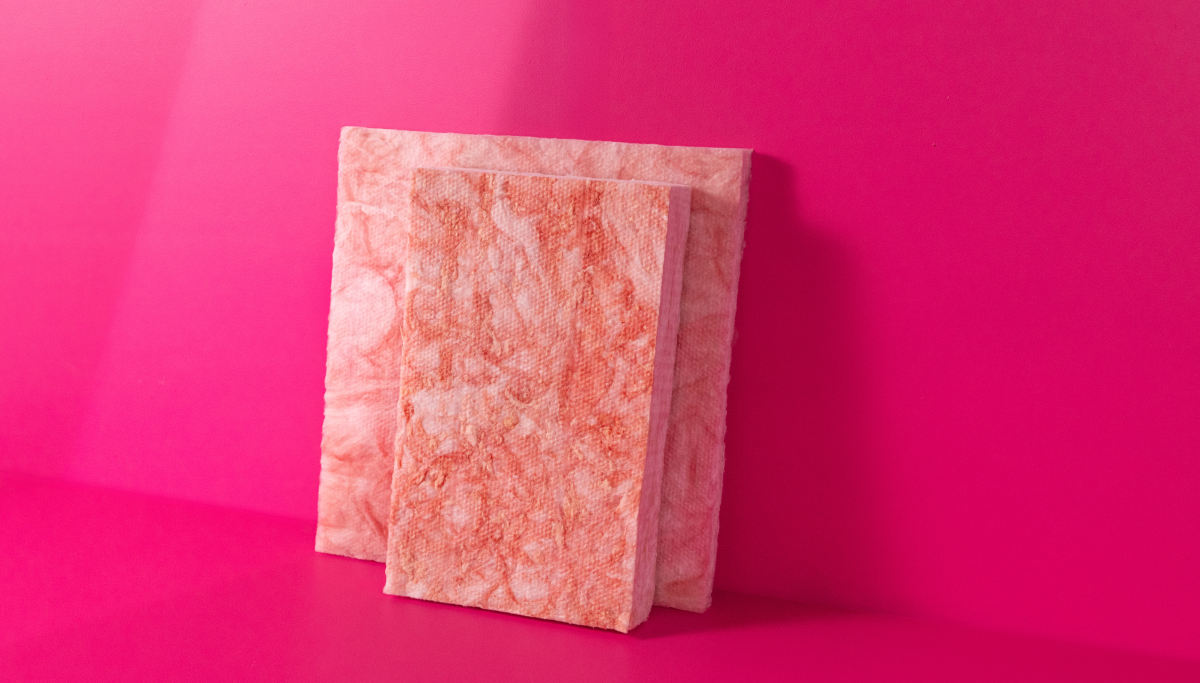
Responding directly to these changes, the Pink® Batts® Perimeter solution has been developed as a purpose-built system aligned with the new H1 requirements. This 100mm thick insulation segment is designed to friction-fit between truss chords, allowing for straightforward installation while maintaining consistent performance. With a product R-value of R2.7, it achieves a construction R-value of at least R2.6 even when truss chords are spaced at 600mm centres, ensuring compliance without the need for additional structural or protective elements.

Importantly, the perimeter solution is not a standalone product but part of a broader, integrated ceiling system. This reflects a growing shift away from one-size-fits-all insulation strategies. In the past, compliance often drove projects toward uniform high-R specifications, such as R7.0 ceilings, regardless of specific building performance needs. While effective on paper, this approach could lead to inefficiencies in both cost and thermal performance.
The integration with the Pink® Superbatts® range introduces a more nuanced approach. Available in R4.5, R5.0, and R6.0 options, these insulation products allow designers to tailor solutions based on orientation, climate conditions and client expectations. Rather than over-specifying across the entire ceiling, architects and builders can now balance winter heat retention with summer heat control more effectively, delivering better overall building performance.
Another key advancement lies in installation efficiency. Traditionally, higher R-value insulation required notching around truss chords. The re-engineered Pink® Superbatts® range allows the insulation to balloon over truss chords, maintaining continuous thermal coverage without the need for cutting or modification. This not only preserves the intended thermal performance but also significantly reduces installation time and labour costs, while improving consistency across the ceiling plane.
Preparing for the H1 transition
Taken together, these developments mark a shift in how roof insulation can be approached under H1. Rather than relying on structural workarounds to achieve compliance, designers and builders can now use products specifically engineered to work within standard construction methods. The result is a more efficient alignment between design intent, regulatory requirements and on-site execution.
As the November 2026 deadline approaches, there is a clear opportunity to revisit standard details and specifications. Adopting a 100mm perimeter strategy allows projects to benefit from reduced structural complexity, faster build times and improved cost control, all while maintaining compliance with the updated code.
Ultimately, the changes introduced in the 6th Edition of H1 do more than adjust performance thresholds. They remove a long-standing constraint and open the door to smarter, more efficient roof design. By rethinking the perimeter and integrating it into a cohesive insulation system, architects and builders can deliver homes that are not only compliant, but also simpler to construct, more cost-effective and better suited to New Zealand conditions.
Register to earn LBP Points Sign in