

Report forecasts 2026 construction rebound
16 Jan 2026, Industry News, News
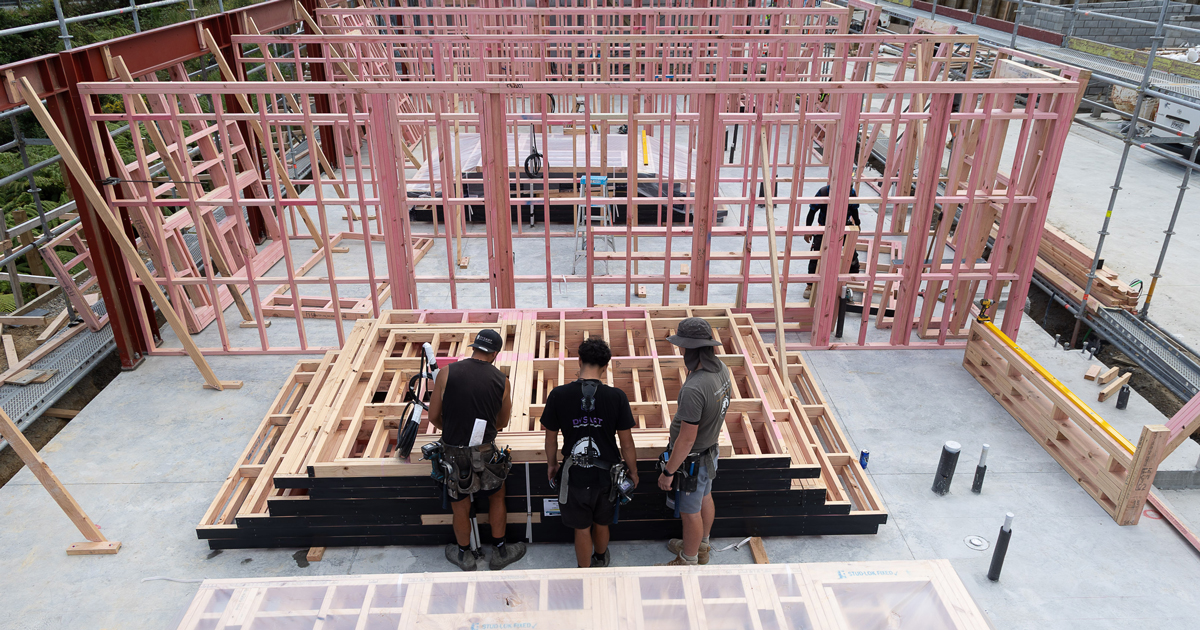
The 2025 National Construction Pipeline Report – based on building and construction forecasting by BRANZ, and data from building economics consultancy Pacifecon (NZ) Ltd on known non-residential building and infrastructure intentions – forecasted construction activity to stabilise in 2025 before returning to growth from 2026, with infrastructure investment and multi-unit housing driving the recovery through to the end of the decade
Commissioned by MBIE and prepared by BRANZ and Pacifecon, the report combines residential and non-residential building forecasts with researched infrastructure intentions. The annual report, which began in 2013, reports on building activity for the coming six years and aims to provide a clear pipeline of building and construction work to help the sector plan for future demand.
The National Construction Pipeline Report 2025 – which was only released at the end of 2025 – forecasts national building and construction activity over the six years from 1 January 2025 to 31 December 2030.
The report showed construction activity continuing to decline in the short term, with total construction activity forecast to fall to $55.7bn in 2025, down from $58.1bn in 2024 and $63.0bn in 2023, reflecting subdued demand and challenging conditions. While the final quarterly construction activity report for 2025 is not yet public, results from the first three quarters of 2025 suggest this forecast was largely accurate.
Good news for 2026
From 2026, construction activity is forecast to return to growth. Total activity is expected to increase steadily, reaching $65.4bn by 2030 as residential, non-residential and infrastructure pipelines strengthen.
Building and Construction Minister Chris Penk said the report provides important guidance for the sector.
“It provides the sector with key information on the expected pipeline of work so they can coordinate construction procurement and support planning, investment in skills and capital equipment to meet the sector’s needs going forward.”
Infrastructure activity is forecast to grow steadily across the forecast period. National infrastructure construction is expected to increase year on year, reaching $19.6bn by 2030. The report attributes this to local and central government agencies finalising future work programmes, improving visibility of transport, water and electricity projects.
Infrastructure decisions underpin the improved outlook, said Penk.
“Firstly, we’ve got a really strong infrastructure pipeline ahead of us. Key decisions have been made about future spending for some substantive projects, particularly in the land transport space.”
Residential activity predicted to grow
Residential construction activity was forecasted to remain subdued in 2025 before recovering from 2026. Residential building activity was expected to fall to $26.1bn in 2025, before rising to $32.3bn by 2030. Multi-unit housing is forecast to drive this recovery, accounting for more than half of all new dwelling consents over the six-year period.
The report forecasts around 215,000 new dwellings to be consented between 2025 and 2030, with approximately 115,000 of these being multi-unit homes. Average annual dwelling consents are expected to sit at around 36,000 over the forecast period.
Non-residential activity declined from a peak of $14.1b in 2023 to $12.1b in 2024 and is forecast to rise steadily to $13.5b by 2030. The private sector continues to be the largest initiator of non-residential buildings, contributing 67.3% of the value of intentions for 2025-2030.
Stabilisation, then growth
Penk said recent declines reflect a combination of factors affecting the sector.
“Many building sector firms reported a reduction in new orders and output over the course of 2025. This is compounded by economic uncertainty, with high interest rates, high building costs still well above pre–pandemic levels and low migration taking their toll on the sector.”
Overall, the report forecasted construction activity stabilising in 2025 before returning to growth from 2026, with infrastructure investment and higher-density housing supporting a more sustainable pipeline of work through to 2030.
Register to earn LBP Points Sign in