
Company fined after ignoring working at height notice
28 Sep 2026, Health & Safety, Industry News, News, Prove Your Know How
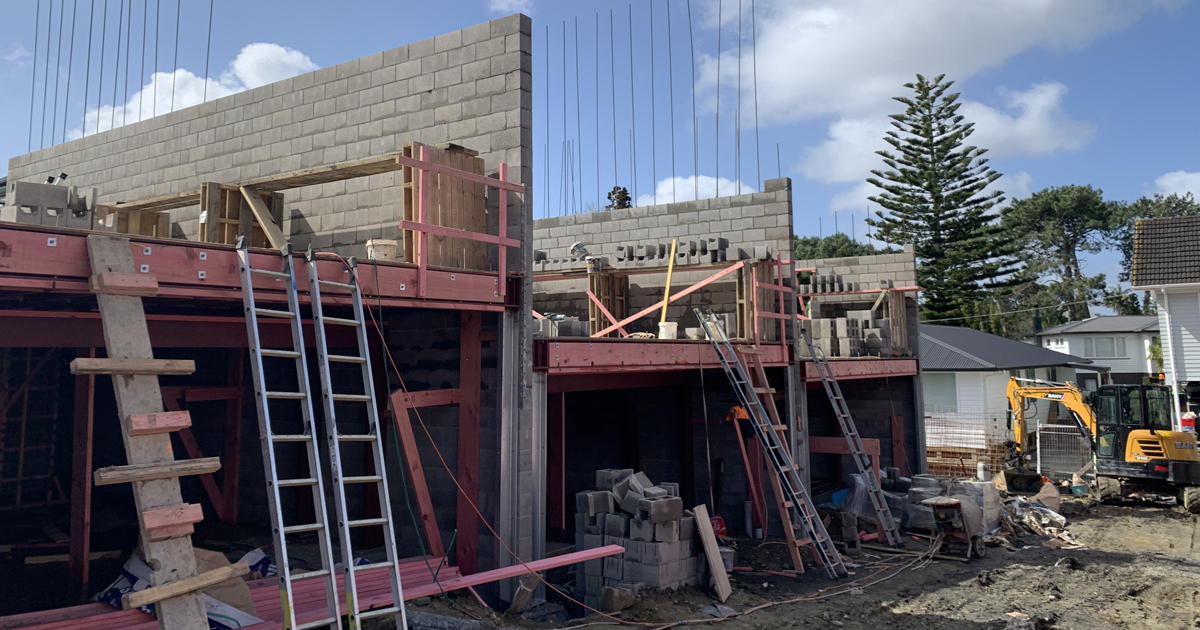
An Auckland construction company has been fined $38,500 after workers continued operating at height despite a WorkSafe prohibition notice
Grace Motors Limited, trading as Grace Construction, was constructing two-storey residential units in Kelston, Auckland when a WorkSafe inspector visited the site on 30 August 2024.
The inspector observed workers on the second floor near an unprotected edge. WorkSafe said the site also had temporary platforms, partially removed scaffolding and ladders that were unsecured and did not comply with requirements.
A prohibition notice was issued to company director Mark Bin Liu, requiring work at height on the second floor to stop until the risk had been addressed and suitable fall protection installed.
However, inspectors observed workers operating at height again on 2 September and 4 September while the notice remained in place.
Grace Motors was sentenced in the Waitakere District Court on 20 August 2026. The company was convicted and fined $38,500, with costs of $1,099.10 also ordered.
In sentencing, Judge Tremewan found the meaning of the notice was straightforward. The judge also acknowledged the inspector’s efforts to gather the workers together and explain its requirements, including arranging translation for Mandarin-speaking workers.
“A prohibition notice is issued because an inspector believes there is a serious risk to health and safety,” said WorkSafe Area Manager Parani Wiki.
“Working at height cannot be treated as business-as-usual until something goes wrong. Businesses need to plan the work, involve workers, put the right controls in place, and make sure they stay in place for as long as the risk exists.”
WorkSafe said ladders are involved in about 40% of fall injuries in construction, while falls from or through buildings are the most common cause of fatal or very serious fall injuries.
Fall risks apply at any height
Working at height is the leading cause of serious injury and death in New Zealand. WorkSafe guidance states that there is no minimum height at which fall risks begin to apply. Under the Health and Safety at Work Act, businesses must manage the potential for falls from any height.
This means the commonly referenced ‘3m rule’ does not remove the need for controls below that level. WorkSafe recommends managing any potential fall greater than 1m using physical barriers or fall restraint.
Short jobs are also covered. A task lasting only a few minutes must still undergo a risk assessment and have appropriate fall-prevention measures in place.
Businesses must consult workers when identifying hazards, assessing risks, selecting controls and checking that those controls remain effective.
Selecting suitable controls
WorkSafe’s hierarchy of controls requires businesses to consider eliminating the risk first. For builders, this could mean completing work at ground level or using alternative construction methods that reduce the need to work at height.
If elimination is not reasonably practicable, businesses should consider substitution, isolation or engineering controls. Depending on the work, these could include scaffolding, edge protection, mechanical access equipment or safety decking.
Administrative controls, such as procedures, training, supervision and exclusion zones, follow lower in the hierarchy. Personal protective equipment is the last line of defence.
Harness systems should therefore not automatically be treated as a substitute for scaffolding or edge protection. WorkSafe says fall-arrest systems should be considered only when higher-level controls are not reasonably practicable and suitable clearance, rescue arrangements, training and supervision are available.
Edge protection should be installed along exposed building and roof edges, openings, lift shafts and similar fall hazards. It should be inspected regularly by a competent person and checked following storms or other events that could affect its performance.
Ladders and stepladders do not provide fall protection and should be considered only for low-risk, short-duration tasks. Workers should maintain three points of contact, avoid overreaching and use industrial-rated equipment with a capacity of at least 120kg.
WorkSafe also advises businesses to make sure workers receive appropriate information, instruction, training and supervision. Untrained workers must be supervised by a competent person, while documented rescue plans should be prepared where required.
Register to earn LBP Points Sign in