

Earthquake-prone building rules narrowed to highest-risk buildings
02 Oct 2026, Building & Housing, Industry News, News, Prove Your Know How, Regulatory
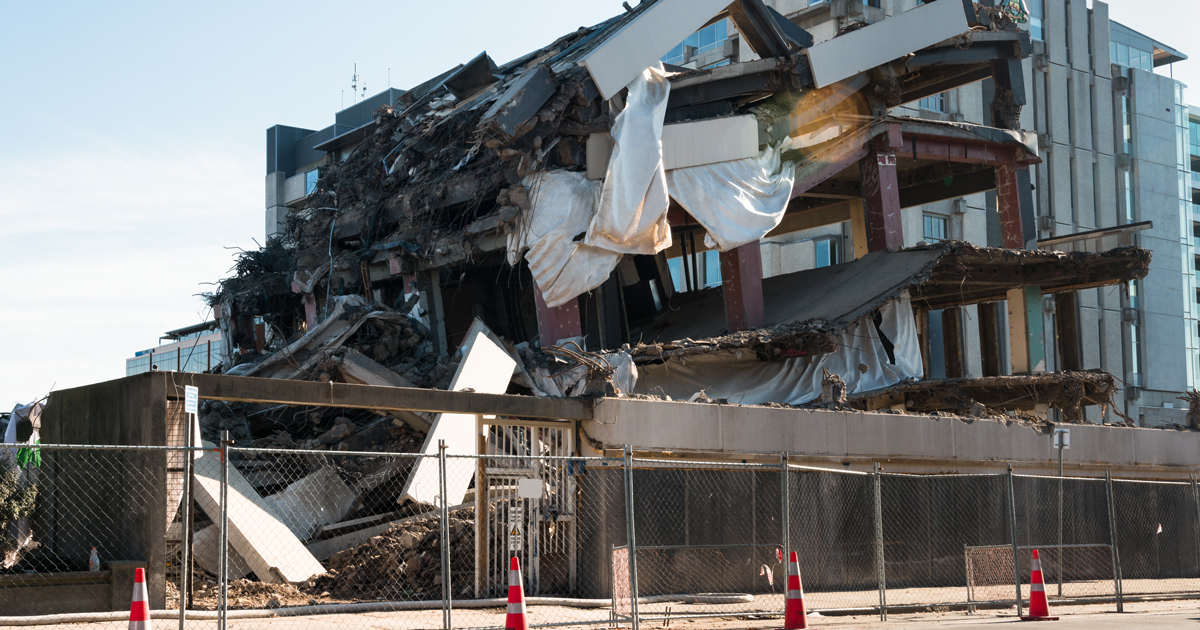
Reforms to New Zealand’s earthquake-prone building system will remove about half of currently designated buildings from the regime and introduce more targeted strengthening requirements from July 2027.
Legislation reforming the earthquake-prone building system has passed its third reading in Parliament, with the Government estimating the changes will save building owners and the wider economy $8.2bn in remediation costs.
The new system will focus on unreinforced masonry buildings and vulnerable multi-storey concrete buildings in areas with medium or high seismic risk. Around half of all buildings currently designated as earthquake-prone are expected to be removed from the system.
Building and Construction Minister Simon Watts said the reforms were intended to address risks to life, while reducing remediation requirements that were disproportionate to the risks presented by some buildings.
Seismic zones updated
Changes to New Zealand’s seismic zones will take effect the day after the legislation receives Royal Assent.
The earthquake-prone building system will no longer apply in Auckland, the Chatham Islands or the upper North Island low seismic zone. Existing earthquake-prone building designations in those areas will be removed and no new buildings there will be designated under the system.
Parts of Dunedin, coastal Otago and Stewart Island will move from a low seismic zone to a medium seismic zone, reflecting updated scientific information about earthquake hazards.
However, only specified building types in medium and high seismic zones will be able to be classified as earthquake-prone under the new regime.
From 1 July 2027, a building will need to be constructed from unreinforced masonry or from heavy materials, such as concrete, and be at least three storeys tall to qualify. Other buildings will be removed from the Earthquake-prone Buildings Register.
“For buildings that remain designated as earthquake-prone, remediation requirements will be more targeted, helping reduce costs and complexity while ensuring life-safety risks are addressed,” said Watts.
Three levels of requirements
The reforms introduce three levels of strengthening requirements, depending on the building type, its location and whether it is situated in an urban centre or a smaller town.
Owners of one or two-storey unreinforced masonry buildings in small towns or rural areas will only be required to display an earthquake-prone building sign and remain listed on the register. Seismic work would still be required to have the designation removed.
Owners of one or two-storey unreinforced masonry buildings in urban centres, or buildings of three storeys or more in small towns, will be required to manage the risk of façades falling onto roads, footpaths, thoroughfares or areas where people congregate. This work will generally involve securing façades to the building frame.
Targeted retrofits will apply to unreinforced masonry buildings of three or more storeys in urban centres and tall, heavy buildings with structural deficiencies in either urban centres or small towns. Work may be required inside and outside these buildings to manage collapse risk.
Councils will retain a limited ability to identify serious seismic risks after the standard identification periods have passed. This will be subject to consultation with the building owner and agreement from the Ministry of Business, Innovation and Employment.
Engineers support targeted approach
Engineering New Zealand welcomed the proposed direction when the reforms were announced in September 2025, describing a more proportionate and risk-based system as a positive step towards addressing the country’s highest-risk buildings.
Chief Executive Dr Richard Templer said the existing approach had resulted in inaction because strengthening requirements were uneconomic in many locations.
“We know the current system is not working and that is not reducing risk,” said Templer.
“What’s crucially important is that our highest risk buildings are fixed and that this happens in a timely way. Shifting the system to target these buildings and the specific changes needed makes this more likely.”
However, Engineering New Zealand also warned that sufficient engineering capacity would be needed to carry out the assessments and strengthening work required under the new system.
Templer said a downturn in engineering work had led some engineers to look overseas for employment, contributing to a longer-term skills shortage. He said the Government would need to ensure New Zealand retained enough engineers to complete the required work.
Engineering New Zealand also called for further support for apartment owners affected by the system.
Guidance to be consulted on
Most of the reforms will take effect on 1 July 2027, giving councils, building owners and the construction sector time to prepare.
MBIE is developing guidance and supporting materials for the new regime. These are expected to be released for public consultation before the end of 2026.
Register to earn LBP Points Sign in