
The two sides of WorkSafe collaboration
29 May 2026, Health & Safety, Industry News, News, Prove Your Know How, Regulatory
Recent WorkSafe cases show different outcomes as a result of how closely builders chose to work with the organisation
Property owner Sanal Lonappan was sentenced in the Palmerston North District Court after WorkSafe found he had continued work at the site, failed to provide required documents and information, and removed prohibition notices from the building’s entrances.
WorkSafe began issuing notices in May 2022 after becoming concerned asbestos was present. Dangerous work on site included removing soffit linings from a canopy directly above a public footpath, creating risk for workers and passers-by if asbestos fibres became airborne.
Judge Lance Rowe imposed a fine of $32,000.
WorkSafe area manager Carl Baker said the case involved repeated non-compliance.
“This was not a one-off lapse. There were multiple chances to engage and put things right. Ignoring our notices did not avoid accountability – it led to a conviction and a fine,” Baker said.
“When we issue a prohibition notice, work must stop immediately. That notice exists because there is a risk of serious harm. It is a legal requirement, not a suggestion.”
WorkSafe says asbestos is New Zealand’s leading cause of work-related death, killing about 220 people each year. It says anyone planning work on buildings built or renovated before 2000 should treat asbestos as a live risk.
Anyone carrying out refurbishment or demolition work must commission an asbestos survey from an accredited surveyor before work begins, avoid disturbing possible asbestos-containing materials without testing, use a licensed removalist where removal is required, comply with prohibition notices, and cooperate with inspectors.
Celebrate good practice
However, recent examples from major projects have also highlighted how close collaboration between contractors, clients and WorkSafe can contribute to improved safety outcomes.
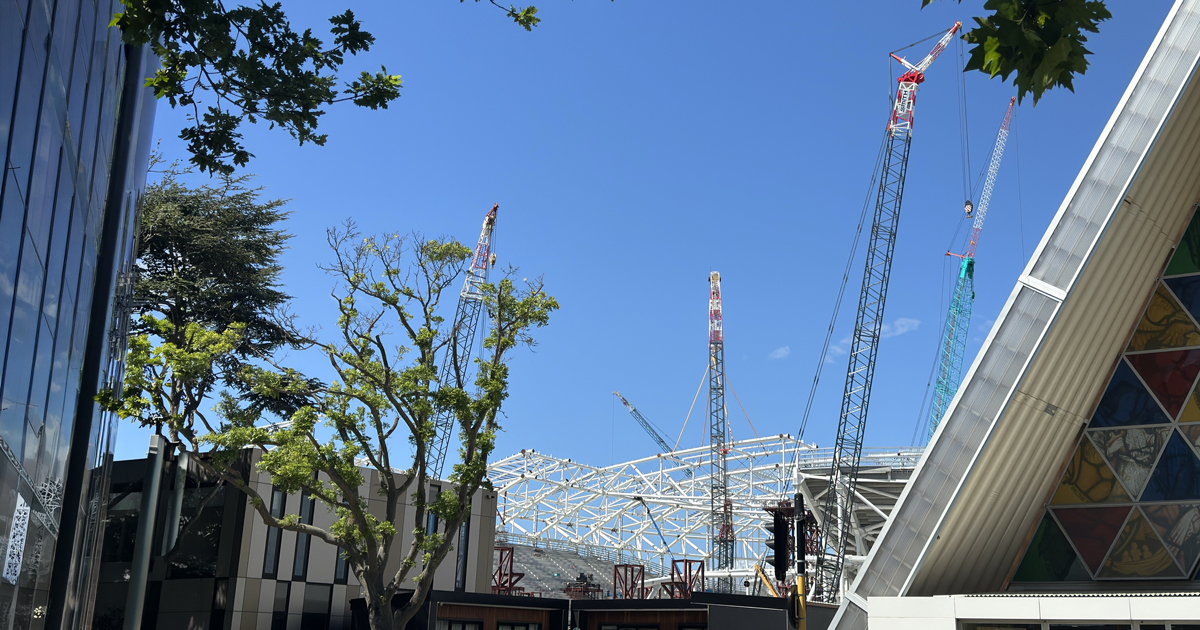
One such example is the construction of Te Kaha Stadium in Christchurch, which was completed without any major harm incidents despite involving around 2,500 workers and more than two million work hours.
WorkSafe described the project as demonstrating what could be achieved through early engagement, clear reporting systems, and a strong safety culture across multiple contractors and subcontractors.
“On large sites, different companies working above and below each other is unavoidable. What matters is being clear about who owns which risks and making sure there’s strong communication between subcontractors before issues arise,” said WorkSafe inspector Paul Hendry.
WorkSafe said safety planning on the stadium build included regular site-wide inductions, coordinated contractor management, and systems designed to encourage workers to report hazards and near misses.
According to WorkSafe, more than 11,000 observations and interventions were recorded during the project, allowing risks to be identified and addressed before serious incidents occurred.
Big projects require in-depth co-ordination
Principle contractor Besix Watpac supported this through structured coordination with the entire workforce – while General Manager Wade Cummins said Bespix Watpac was happy to ask WorkSafe for help and support throughout the construction process.
“Previously, some in construction had viewed WorkSafe as unapproachable. But I’m certain [WorkSafe’s support] helped change people’s views,” said Besix Watpac’s New Zealand General Manager Wade Cummins.
WorkSafe inspector Sherry Peck says that openness meant risks could be addressed early.
“When we identified situations where controls weren’t sufficient, we raised them with the project team and worked through practical improvements together – tightening exclusion zones, improving sequencing and clarifying responsibilities,” said Peck. Where formal notices were needed, they were part of a wider learning process.
“When everyone understands their role and feels confident to speak up, safety becomes part of how the job is done, not something separate from the build.”
The construction sector continues to account for a significant proportion of workplace injuries and fatalities in New Zealand. Industry groups and regulators have increasingly focused on improving safety culture alongside enforcement activity.
The contrast between the two cases reflects the different outcomes that can emerge depending on how businesses engage with health and safety requirements.
In the Lonappan case, WorkSafe said enforcement action escalated after he failed to respond appropriately to repeated intervention. In the Te Kaha project, ongoing cooperation and proactive risk management helped prevent serious harm on a large and complex construction site.
Register to earn LBP Points Sign in